

Why New Construction is the Best Time to Install a Security System in Maine
Why the Best Security Decision Happens Before the Walls Close
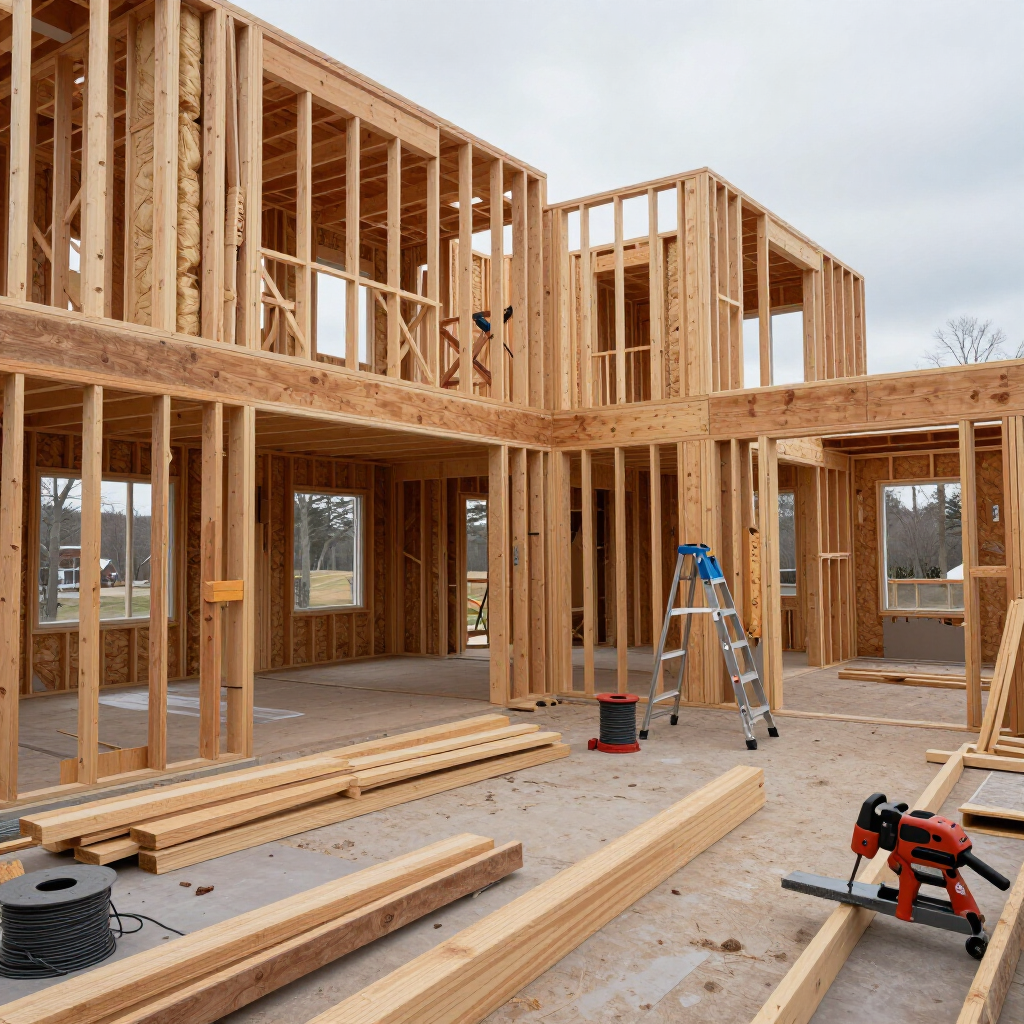
Building a new home or commercial property is one of the biggest investments you'll ever make. You've spent months working with architects, contractors, and designers to get every detail right — from the floor plan to the finishes. But there's one decision that's easy to overlook until it's too late: your security system.
Most Maine property owners don't think about security until after they've moved in. By then, the walls are closed, the ceilings are finished, and installing a hardwired system means cutting into drywall, fishing wires through insulation, and patching everything back together. It's disruptive, expensive, and often results in a less capable system than you'd get if security had been built in from the start.
New construction is your one window to do this right. Here's why.
The Wiring Goes In While the Walls Are Open
The single biggest advantage of installing a security system during construction is access. Before the drywall goes up, electricians and security technicians can run wire anywhere — cleanly, invisibly, and at a fraction of the cost of retrofitting.
This matters for every component of your system:
- Motion detectors and door/window sensors can be wired directly into the wall rather than surface-mounted with visible conduit.
- Security cameras can be positioned exactly where coverage is needed, with power and data cables running through the structure rather than along baseboards or exterior walls.
- Keypads and control panels can be recessed into walls for a clean, built-in appearance.
- Fire and carbon monoxide detectors can be hardwired throughout the entire building to a central panel, providing far more reliable coverage than battery-operated units.
Once the walls close, all of that flexibility disappears. A retrofit installation will always involve compromise — running surface cables, drilling through finished trim, or settling for wireless sensors where a wired solution would have performed better.
You Get a More Capable System
Wired security systems aren't just cleaner-looking — they're more reliable. Wireless sensors depend on batteries that need replacing and signals that can be interrupted. Hardwired components communicate consistently, without the interference issues that can affect wireless systems in homes with thick walls, metal framing, or large square footage.
In a new construction setting, you can also design the system around your floor plan rather than working around it. That means:
- Optimized camera placement with full coverage of entry points, driveways, and blind spots — positioned during the design phase, not after the fact.
- Whole-building fire protection with hardwired smoke and heat detectors connected to a central panel, meeting Maine's residential code requirements with a system that's built to last.
- Integrated access control for commercial properties, with card readers, electric strikes, and door contacts wired in before the doors are even hung.
The result is a system that performs better, looks cleaner, and requires less maintenance than anything installed after the fact.
It Costs Less Than You Think — and Much Less Than Retrofitting
There's a common assumption that building security into new construction adds significant cost to the project. In reality, the incremental cost of running security wire during construction is modest — especially compared to the labor involved in retrofitting a finished building.
When a security technician works alongside your electrical crew during the rough-in phase, the wiring is efficient and straightforward. There's no drywall to cut, no finishes to damage, and no patching to pay for afterward. The technician runs the cable, labels the endpoints, and everything is ready for trim-out once construction is complete.
Compare that to a retrofit job, where the same installation might require:
- Cutting and patching multiple drywall sections
- Running conduit or raceway along finished surfaces
- Coordinating multiple visits around your schedule
- Potentially relocating sensors or cameras because the ideal spots aren't accessible
Planning security during construction is almost always the more cost-effective path.
It's Easier to Integrate With the Rest of Your Smart Systems
Modern homes and businesses are increasingly built with smart technology in mind — structured wiring for networking, pre-wired for audio/video, designed to support home automation. Security integrates naturally into this ecosystem when it's planned from the beginning.
During new construction, your security provider can coordinate with your electrician, low-voltage contractor, and builder to ensure that everything works together. Smart locks, video doorbells, lighting automation, and alarm monitoring can all be tied to a single platform, giving you centralized control from your phone or a wall-mounted panel.
When security is added as an afterthought, integration is harder. Systems end up siloed, interfaces multiply, and the "smart home" experience feels less cohesive. Building it in from the start means everything is designed to work together.
Maine's Climate Demands Robust, Permanent Solutions
Maine winters are hard on everything — including security equipment. Exterior cameras, outdoor sensors, and wiring pathways all need to be designed for the climate. When you're building new construction, you have the opportunity to specify weather-resistant housings, route exterior cables through conduit protected from freeze-thaw cycles, and position equipment in locations that are both effective and sheltered.
A retrofit installation in Maine often involves mounting cameras and running cables in conditions that weren't designed for security equipment. Cables exposed to the elements, sensors positioned for convenience rather than optimal coverage, and equipment that wasn't specified for northern New England winters — these are the kinds of compromises that come from installing security after the fact.
Building security into your Maine construction project means it's engineered for the environment from day one.
For Contractors: Your Clients Expect It
If you're a residential or commercial contractor in Maine, security is increasingly something your clients ask about — and something your competitors are starting to offer. Partnering with a local security company allows you to offer a complete solution, not just a finished building.
Working with On Pointe Security on new construction projects means your clients get a professional security consultation during the design phase, installation coordinated with your build schedule, and a finished product that reflects well on the quality of your work. It's a value-add that sets your projects apart and builds long-term relationships with clients who trust you to think about the full picture.
Don't Wait Until Move-In Day
The best time to think about security isn't when you're unpacking boxes or opening your new business. It's during the planning phase, when every option is still available and every decision can be made deliberately.
On Pointe Security works directly with homeowners, business owners, and contractors throughout Maine on new construction projects of all sizes. We coordinate with your build team, design systems around your floor plan, and install everything so it's ready the day you move in — with no patching, no compromise, and no "we'll deal with that later."
If you're planning a build, reach out to On Pointe Security early. A five-minute conversation at the planning stage can save you thousands down the road and give you a security system that performs exactly the way it should.
On Pointe Security Systems serves homeowners and businesses throughout southern and central Maine, including new construction residential and commercial projects. Contact us at (207) 509-3531 or info@onpointesecurity.com to schedule a consultation.